
LifeCity Provides Impact Reporting Services for Food Bank of the Rockies
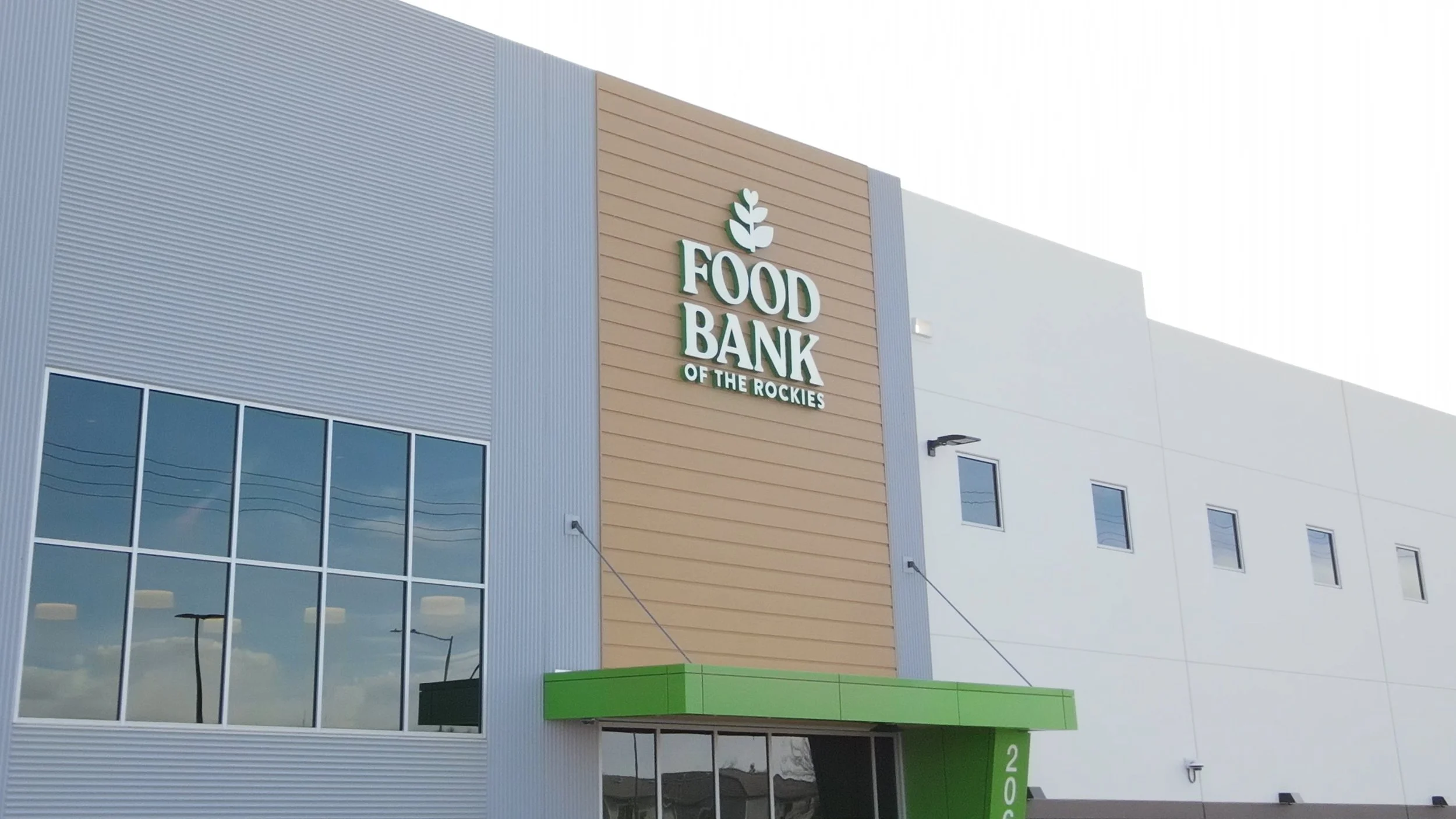
In April 2026, LifeCity’s impact reporting team traveled to Aurora, CO to validate the impact of National Impact Fund (NIF)’s New Markets Tax Credit (NMTC) investment in the Food Bank of the Rockies (FBOR). NIF, a subsidiary of North Sky Capital, provided NMTC allocation to help the food bank build a state-of-the-art, 270,000 square foot food distribution facility that will enable the organization to significantly expand its programming and food distribution.
NIF’s investment will help FBOR increase its food distribution across its 55-county service area. The building was designed to make FBOR “the most efficient and effective organization possible,” according to FBOR CEO Erin Pulling. Whereas the food bank previously operated out of two facilities totaling around 150,000 square feet, the project will expand the food bank’s footprint and bring the distribution processes into a single facility. The new facility features 72,000 square feet of dry storage with additional space due to the higher vertical storage capacity. The 22,000 square feet of volunteer space quadruples the previous volunteer area. The facility also features a 7,000 square foot commercial kitchen, around 40 loading docks, 14 meeting spaces, and 300 parking spaces – all significant increases built specifically for the food bank’s operations.
Fighting Food Insecurity
FBOR serves an area comprising 55 counties across Colorado and Wyoming, the largest geographic area served by any Feeding America food bank in the contiguous United States, according to Pulling. When the new facility reaches full capacity, FBOR projects to serve over 430,000 individuals annually, distributing over 96M pounds of food, with the ability to increase in the event of a crisis. The proportion of fresh produce will increase to around 40%, totaling over 38M pounds. This increase results from major upgrades to the warehouse, cold storage space, loading docks, commercial kitchen, and volunteer areas. The food bank reaches the community by leveraging its network of over 700 hunger relief partners across its service area. Emily Stromquist, Executive Director of Food for Hope, a hunger relief partner focused on providing healthy food to food insecure children in local schools, described the impact of FBOR’s new facility: “The capacity they have for receiving food means they have more variety for people like us….[Families] love fresh food when it’s available. So I can already see that the new facility is enabling us to access more food that’s meaningful to families."
Additionally, FBOR operates a variety of programs designed to make sure food reaches all corners of the community, including mobile pantries, Everyday Eats program which targets older adults, Food for Health program which provides healthy options for food insecure individuals and families, and Food for Kids, which provides food for children after school, on weekends, and over the summer.
Supporting Local Workforce
FBOR is a quality employer in the region, and the expansion will allow them to maintain that position. NIF’s investment is projected to support 179 full-time equivalent (FTE) jobs at the food bank, 178 of which will be quality jobs and 171 will be accessible to individuals with lower levels of education. Additionally, the project created 128 temporary jobs during the construction phase, 96% of which were quality jobs. According to Steve Kullberg, Chief of Staff for FBOR, “We have always tried to make sure that our employment of people is not creating more people who need food help. So we don’t want to hire at the low end of the wage market. We’re trying to provide jobs that are rich, rewarding, and enjoyable.”
The food bank takes pride in offering opportunities to individuals with barriers to employment, according to Kullberg, who described the food bank’s approach to second chance employment: “It’s one of the things I’m really proud that we do, where we’re able to bring people out of drug rehab programs and other challenging backgrounds and help them get a fresh start.” The new facility will also allow FBOR to provide workforce development opportunities to the broader community through a new culinary training program. The food bank will partner with Clayton Early Learning Center to provide workforce training to at-risk individuals, focusing specifically on single mothers. At full capacity, the program will provide training to 24 individuals annually.
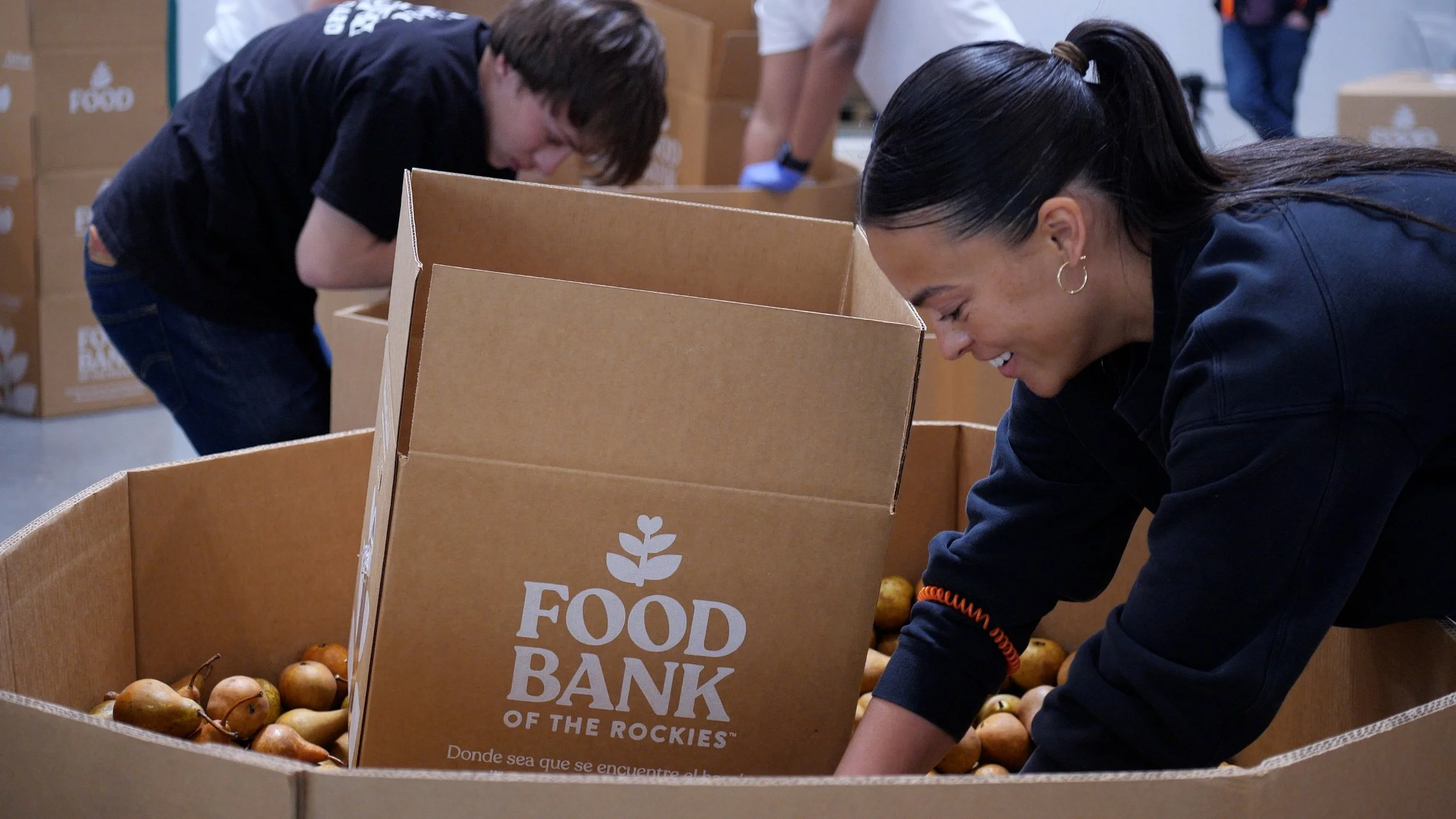
The new building will also expand access for volunteers. At the new facility, according to Kullberg, the food bank will be able to handle 200 volunteers in a single shift. Lead Volunteer Romaine Tacznosky described the difference between the two facilities: “This is amazing. We were so cramped before, like elbow to elbow. We would bump into each other….This is superior, excellent, amazing – I’m going to run out of adjectives.”
Sustaining the Environment
The new FBOR facility was designed with sustainability in mind. The building has numerous design features that enhance the project’s environmental impact, including solar panels, energy efficient building systems, and advanced recycling processes. The building has nearly 2,500 solar panels on its roof, with a generation capacity of nearly 1.3 MW, according to Kullberg, with the expectation of generating around 675,000 kWh annually – an amount that will drastically reduce FBOR’s dependence on the energy grid. The increased number loading docks reduce truck idling, which also has positive impacts on carbon emissions.
FBOR projects it will save around $400,000 in annual energy costs and reduce annual water consumption by 472 gallons through building efficiency measures. As the project reaches full capacity, FBOR expects to recycle 250 tons of material annually by 2030, which will also reduce disposal costs for partner agencies. One of the largest environmental benefits of FBOR is its ability to divert food waste from the landfill. By 2030, FBOR anticipates rescuing 54M pounds of food, composting 100,000 pounds, and providing 200,000 pounds of food to farmers and animal sanctuaries annually.
Food Bank of the Rockies represents an important use of NMTCs – to expand food distribution and stabilize communities facing food insecurity. By reducing food insecurity throughout Colorado and Wyoming, FBOR is helping individuals and communities thrive across the region. LifeCity is proud to support this critically important work.