
Discussing the Importance of Urban Reforestation in New Orleans
The best time to plant a tree was 20 years ago. The second-best time is today.
This past spring, New York City debuted its first-ever Urban Forest plan. America’s most densely populated city is striving to cultivate a tree canopy that shades 30% of the city in the next 15 years through its coordinated strategy. This initiative will contribute to New York’s climate adaptation by cooling the city, filtering pollution, and expanding access to urban nature.
Inspired by this Urban Forest Plan, LifeCity will be examining New Orleans’ own relationship to urban forests to examine how we can develop a strategy to profit from the environmental, social, and economic benefits of a healthy tree canopy.
We will be discussing the importance of urban reforestation in New Orleans alongside how long-term sustainability planning and goal-setting for sustainability can help New Orleans grow for good. We will also explore how various stakeholders, from city government to local businesses, can contribute to restoring our vital tree canopy.
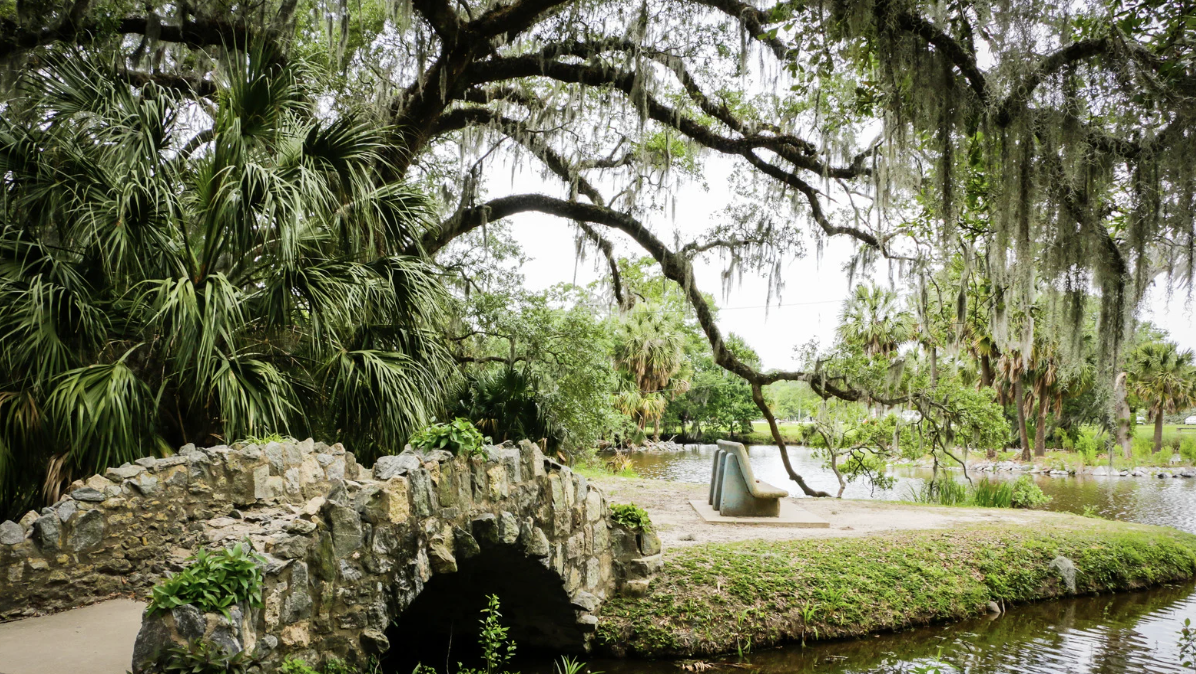
Trees as Living Infrastructure
Trees are more than an ornamental piece of landscaping; they provide a series of significant ecosystem benefits to a surrounding neighborhood. Trees naturally filter the air from pollutants and reduce the amount of greenhouse gases in a neighborhood. They act as natural carbon sinks, which means they absorb and store carbon that otherwise would stay in the atmosphere as carbon dioxide.
Fully-grown trees can reduce peak temperatures of a tree-lined street by 2-9°F during the scorching summer months. Cooler temperatures result in lower energy bills for residents trying to keep cool, in addition to reducing the risk of heat-related illness and health complications.
In New Orleans, native trees help to combat flooding by absorbing excess water through their root systems. For example, a fully grown bald cypress tree can drink hundreds of gallons of water a day, alleviating strain on stormwater systems and decreasing flooding risk.
Urban tree canopies are a crucial piece of living infrastructure for any city. Though New Orleans is known for its stunning live oaks and bald cypress trees, urban development and hurricane damage have put serious stress on our tree canopy. Mature trees are being lost at a greater rate than they are being replaced, which is a serious concern for the longevity of this critical network. Currently, New Orleans has 18% tree canopy coverage across the entire city, but some neighborhoods have less than 5%.
As a result of this deforestation, New Orleans suffers from one of the worst urban heat island effects in the South, raising the risk for extreme heat conditions. As New Orleans seeks clear, tenable solutions to pressing climate concerns, a unified reforestation plan is a potential sustainability strategy for the city to pursue.
Growing Together, Rooted in Community
This problem is not going unaddressed. SOUL and NOLA Tree Project are two nonprofits working to reforest the city.
SOUL – Sustaining Our Urban Landscape – is an organization that plants, cultivates, and monitors trees throughout the team’s reforesting efforts in New Orleans. Their mission is to restore the urban tree canopy in order to strengthen the ecosystem benefits of urban forests, specifically on the neighborhood scale. This strategy allows SOUL to focus on areas of the city that have faced the highest levels of deforestation and exposure to climate hazards. The benefits of reforestation are most salient when there is a robust canopy throughout the neighborhood rather than individual, sporadic trees.
NOLA Tree Project is another nonprofit seeking to restore and nurture the tree canopy of New Orleans. Founded after Hurricane Katrina destroyed thousands of trees in the city, the NOLA Tree Project has planted and donated a combined 91,000 trees over the past 20 years. The Project has worked with the city to plant trees in parks, neutral grounds, and other city green spaces.
One of the most important aspects of SOUL and NOLA Tree Project’s work is community engagement and involvement. Addressing the urban canopy problem from a neighborhood scale enables these organizations to address pressing equity issues regarding deforestation in New Orleans. SOUL prioritizes active participation of neighborhood associations and communities in the planning process to ensure residents’ visions are being accounted for. By focusing on neighborhoods that have historically suffered from underinvestment and a lack of robust tree canopies, these organizations are working to not only reforest New Orleans overall but specifically address the historical inequality embedded into the urban landscape of the city.
It is not just nonprofit organizations that have a stake in creating a better urban canopy for New Orleans. Businesses can align their ESG strategies with the work of SOUL and the NOLA Tree Project. By supporting these organizations directly or fostering tree coverage in your area, your business can be a part of the team working to reforest New Orleans. You can also unlock those energy-saving, flood-reducing benefits as a bonus of cultivating a robust tree network. This strategy is in-line with the Love Your City Scorecard goals for the Built Environment and Energy Management, two key components of sustainability goal development.
Long-Term Sustainability Planning
“While 2040 appears to be far away, 17 years represent a fraction of a tree’s life. Live oaks and cypresses live well over 200 years. Restoring New Orleans’ canopy will require a sustained, patient, tenacious effort... Inevitably, there will be problems... The champions of this effort will need to be highly adaptive, learn from each other along the way, and help show the world how New Orleans, by sheer force of will and civic commitment, has learned how to live in a wetter and hotter world.”
- New Orleans Reforestation Plan
In 2022, SOUL, advised by several divisions of New Orleans’ municipal government along with the Sewerage and Water Board, put together the New Orleans Reforestation Plan. This report outlined the various environmental challenges facing New Orleans, such as heat stress, sea-level rise, subsidence, and socio-economic vulnerability. It also highlighted the numerous benefits of a more robust tree canopy in the city, many of which we have already discussed here. What comes next is the most important part – the goal-setting and sustainability strategy that turns potential solutions into real targets to aim for. One of those goals is for New Orleans to create a Unified Tree Policy of our own by 2028. This would function as a road map for city officials across various agencies to coordinate and invest in a tree canopy as a living infrastructural system. Alongside a 10-year pilot neighborhood program, these targets encourage a leap from the hypothetical to the achievable.
Thinking of long-term, big-picture sustainability strategies can be difficult when there are so many immediate needs and concerns. As demonstrated by LifeCity’s recent roundtable discussion regarding the future of our coast, there is a lot at stake when developing these plans. Experts and stakeholders cannot always come to a consensus when dealing with such challenging, multifaceted problems. On top of this, the changing landscape of federal and state funding further exacerbates tricky dilemmas.
The New Orleans Reforestation Plan is clear-sighted in its time commitment. The longevity of this plan requires consistently prioritizing a better future decades down the line. But the work has already started in neighborhoods across the city as climate adaptability and environmental justice become ever more important to the future of New Orleans. As the saying goes, the best time to plant a tree was 20 years ago. The second-best time is today.