
When asked about her internship at LifeCity, Sustainability Communications Support Intern Kennedy Derosin said that one of the best parts wasn't a meeting or a project. It was recess.
One afternoon, the LifeCity team stepped away from our desks for 30 minutes and headed outside with nothing but a soccer ball, some juggling balls, and a dream. The team spent the break kicking around the soccer ball, juggling, laughing, and enjoying the fresh air. It was simple, but it completely reset everyone's energy.
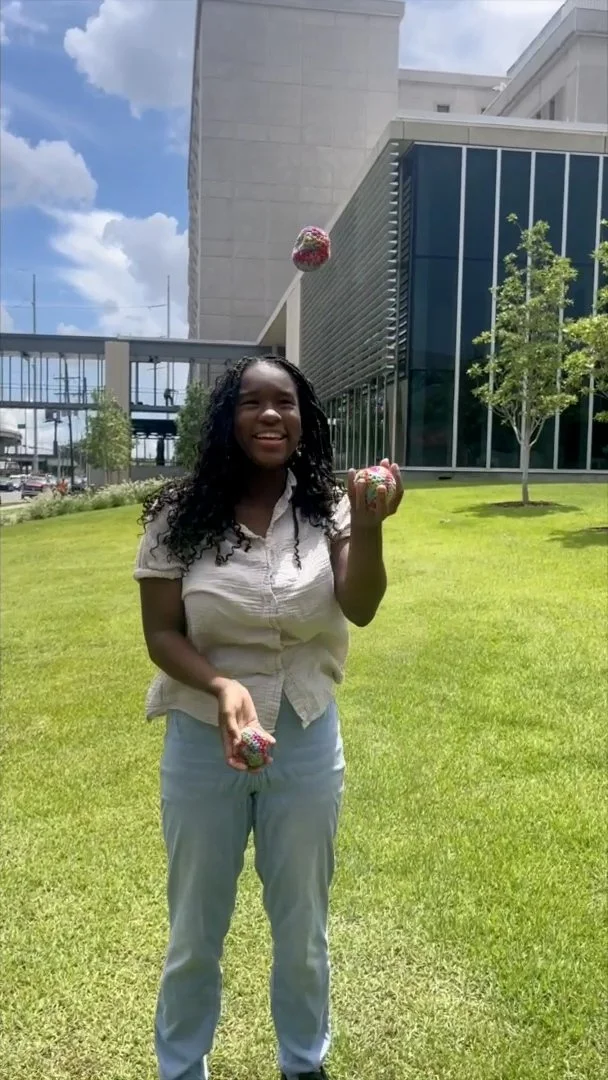
LifeCity Sustainability Communications Support Intern Kennedy Derosin learns to juggle during recess
Prioritizing Well-Being
The reality is that the majority of our work at LifeCity requires us to spend time on our computers. As a result, it is easy to become stagnant and to begin experiencing the numerous negative social and physical outcomes that come with excessive screen time. These can include digital eye strain, tension headaches, neck and back pain, and disrupted sleep cycles. Social-emotional impacts of excessive screen time can include social isolation and disruption of real-world communication skills, and these outcomes can be exacerbated when computer-based work is completed remotely.
As a result of this dynamic, we have continually worked to balance two key business goals: our dedication to producing the highest quality products for our clients, along with the commitment to provide the best possible experience for our team that promotes growth along with mental and physical well-being.
Perhaps counterintuitively, these goals are not contradictory. Taking breaks during the workday, particularly when those breaks involve looking away from screens and ideally spending time outdoors, results in numerous positive outcomes including increased productivity and creativity, improved mental health and well-being, and reduced decision fatigue. For businesses, employees feel more valued and report higher job satisfaction when they are given opportunities or are incentivized to take breaks. Employees who feel more appreciated produce higher quality work, leading to potentially better client outcomes and ultimately greater success for the company.
LifeCity has taken numerous steps to maximize flexibility, trust, and well-being within its team. We have implemented flexible work arrangements, a hybrid work schedule, and a 4-day work week to help maximize work-life balance and increase productivity and engagement during work. We also engage quarterly mental wellness surveys to assess the current state of belonging, stress, and workload among the LifeCity team. Business recess represents another opportunity for us to remain on the cutting edge of employee well-being, and the team is working on incorporating regular recess into our work routines.
Building Connections
Breaks are important, but how those breaks are used matters. As adults, we often treat breaks as time to scroll on our phones or answer more emails. But a little movement and play can do wonders. Getting outside, being active, and sharing a few laughs with coworkers made us feel more connected and ready to jump back into work. Effective breaks engage a part of our brain that is different from the parts used during work, allowing for a real refresh. Additionally, stepping away from screens, and especially activities associated with negative emotions like social media, is critical for improving well-being.
During LifeCity’s first business recess, we left the office, headed to a nearby green space, and Sustainability Intern Georgia Hoffman taught the team to juggle. Georgia described why she loves juggling: “It’s a really fun thing to learn because by nature of it, you’re not going to be super great on the first try, and that’s okay. Dropping it is part of the process….You can try and fail, and then you can try and succeed.” Kennedy spoke about the importance of learning a new skill, confidence, and just having fun with your friends: “I feel more confident….It works a different part of your brain.”
We all have an inner child somewhere, and that child is screaming to have fun! Any activity that gets people away from their screens for a few minutes can be a benefit for employees and the entire organization. Sometimes the best way to be more productive is to take a real break.
After our 30-minute recess, everyone came back refreshed, smiling, and ready to work. It was a reminder that productivity isn't just about working harder, it's also about making time to recharge. Work hard but play harder.