
LifeCity Provides Impact Reporting on NMTC-Financed Solar Projects
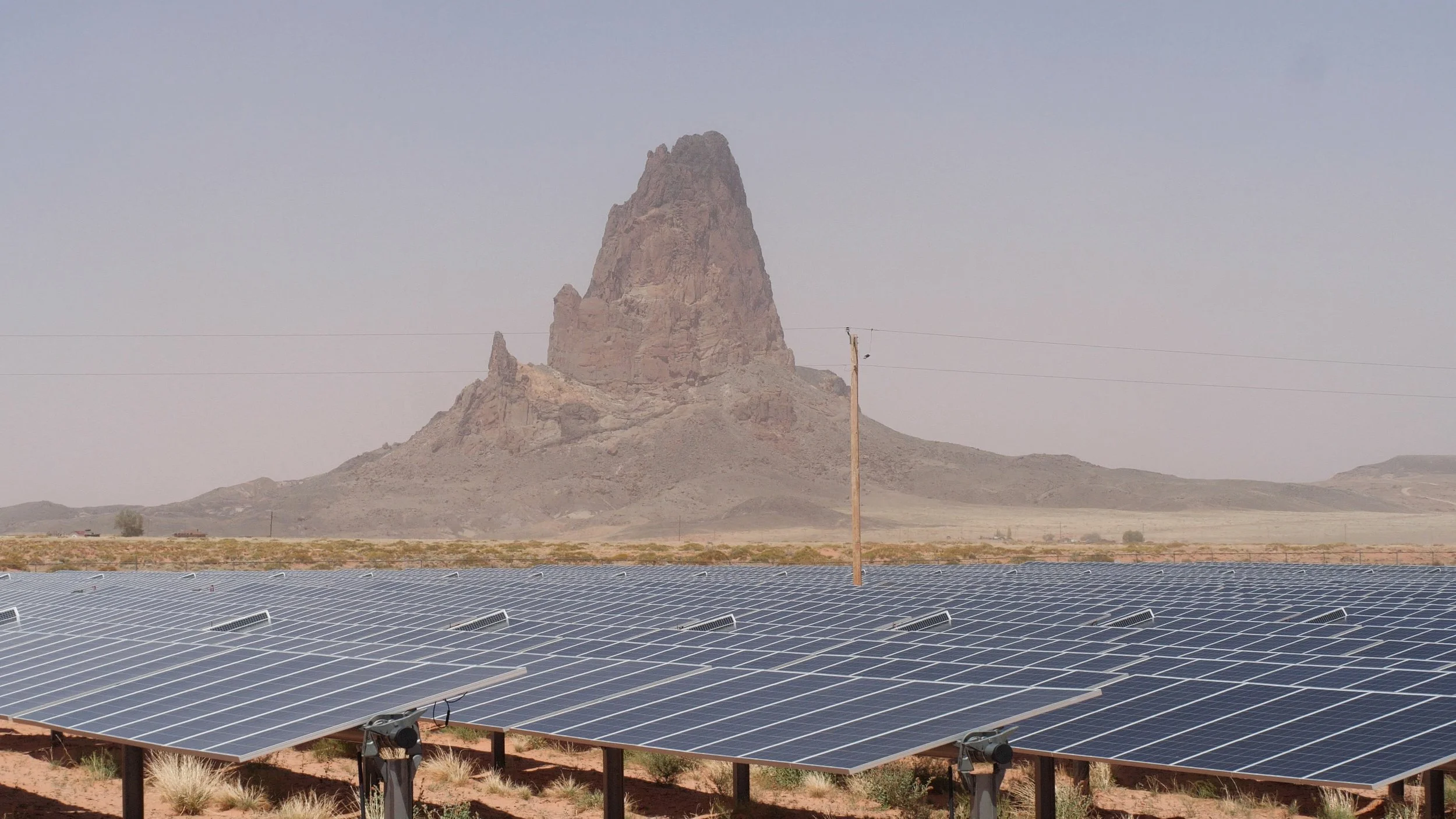
In May 2025, LifeCity visited the Navajo Nation to validate the impacts of two solar energy projects – the Kayenta I Solar Facility and the Red Mesa Tapaha Solar Farm. Each project is located within the Navajo Nation in the Kayenta and Red Mesa Chapters, respectively. The projects were each partially funded via the federal New Markets Tax Credit program, and they both provide clean, renewable energy along with quality jobs in severely distressed low-income communities. Through its impact reporting process, LifeCity was able to speak with local leaders about the social and economic impacts of these projects.
A Complex Relationship with Energy Production
The Navajo Nation has a complicated history with energy production. Historically, the area around Kayenta was dominated by resource extraction – including uranium and coal mining – which provided jobs but resulted in severe environmental harm. The Black Mesa Mine Complex, owned and operated by Peabody Energy, comprised the Black Mesa Coal Mine, which operated from 1965 to 2005, and the Kayenta Coal Mine, which operated from 1973 to 2019. The complex was located entirely within the Navajo Nation and provided coal power to the Navajo Generating Station (NGS), the largest coal-fired power plant west of the Mississippi River, until its closure in 2019. The coal mining operation severely depleted aquifers within Navajo Nation, leading to potential shortages in potable water along with other environmental harm that results from strip mining.
As a result, it was critical for the Navajo Nation to replace the economic opportunity lost by the closure of the mines without returning to the environmentally harmful nature of the industries that had previously dominated the region. The Navajo Tribal Utility Authority (NTUA), a tribal nonprofit established in 1959 that is tasked with establishing access to basic utilities like water and electricity throughout the Navajo Nation, pursued a strategy that included solar power, which has now led to multiple solar energy projects including Kayenta Solar Phase I and the Red Mesa project, as well as plans for additional solar projects in the future.
Producing Clean, Renewable Energy
Darryl Begaye, Project Management Liaison for NTUA, thinks the solar projects are an ideal fit for the Navajo Nation: “The benefits of solar, they have a large footprint, but as far as carbon, as far as other issues that are affecting the world today, it has less of an impact. And I think a lot of Navajos appreciate that.”
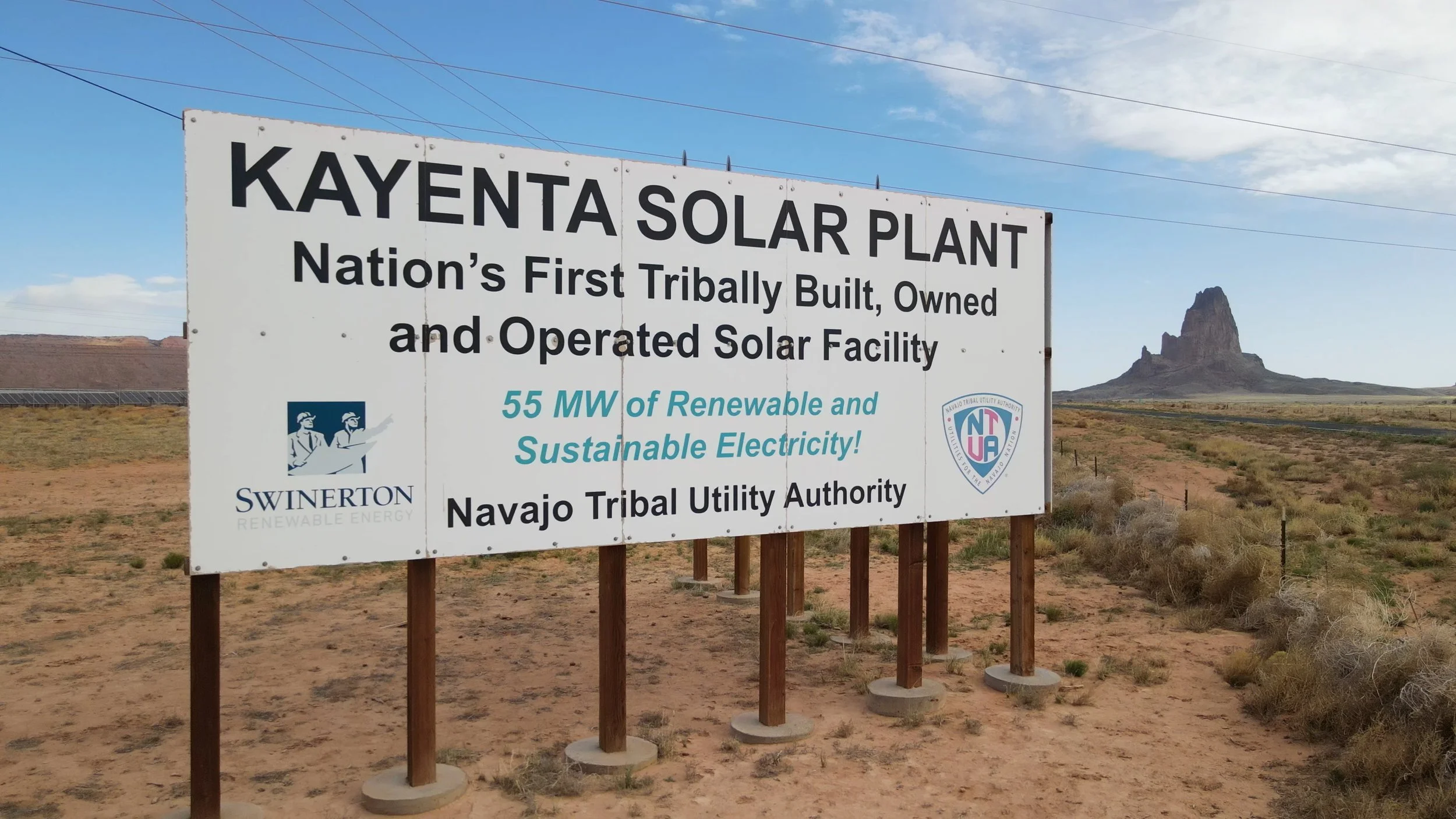
The Kayenta I facility has a capacity of 27.3 MW, enough power to provide energy to 18,000 homes, all within Navajo Nation. The entire Kayenta Solar Complex, including Kayenta II, has a generating capacity of 55 MW. Red Mesa has a generating capacity of 72 MW. A small portion of that (6 MW) will be used to power around 5,000 homes across three Navajo communities, and the remaining 66 MW will be exported to utility grids outside of the Navajo Nation. The revenue generated from these energy exports will help provide energy access for an additional 13,000 homes across Navajo Nation. This is especially critical given the very significant challenges around utility access in the Navajo Nation, with between 30% and 40% of homes lacking access to basic utilities including electricity and water.
Creating Jobs and Economic Impact
The closure of the NGS and Kayenta Coal Mine was devastating for the local labor force. All of the 750 employees at NGS and the 265 employees of Kayenta Coal Mine were laid off, most of whom were Navajo. Dalton Singer, Secretary-Treasurer for Navajo Nation’s Kayenta Chapter, said that “it’s hard for community members to find a job where they can really pay the utility bills. A lot of our community members fall behind.” The two projects will create 12 direct, permanent full-time equivalent (FTE) jobs while retaining 35 others. Each project created around 300 construction FTEs, primarily occupied by Navajo people who received training that can help them gain quality employment in future solar projects.
The wages and revenue created directly from the projects will generate significant economic impact. In addition to the revenue created by exporting energy, the Red Mesa project is projected to have an economic impact of $20.6M within Navajo Nation. The $11M in wages created by the Red Mesa project is projected to create $38.5M in economic activity throughout San Juan County, UT.
Supporting Community Development
Critically, NTUA projects use Navajo preference in hiring, which ensures that quality job opportunities and skills training will be accessible to Navajo Nation residents, many of whom have historically lacked access to these quality opportunities, particularly since the closure of the NGS. According to Begaye, “With every new project, we comply with the Navajo Preference Act, so a lot of the construction jobs are filled by local people.” The solar projects created 300 construction jobs each, and the majority of those were filled by Navajo people. Additionally, a total of around 200 individuals received around 4,700 hours of workforce training associated with each project.
The opportunity to hold a quality job on Navajo Nation is critically important to many local residents. Nalando Ball, a Tech Lead for DEPCOM Power, the Operations and Maintenance contractor for Kayenta Solar, described the experience of working close to home: “A lot of our traditional values are becoming less and less known, which is quite sad. So to be here, to make what I make, and still be around members of my community, speak the language, and learn, that’s great.”
LifeCity’s impact reporting process showcases the inspirational stories that emerge from community investment opportunities, many of which are financed through the NMTC program. The Kayenta and Red Mesa solar projects demonstrate the critical importance of infrastructure investments that can create pathways to recovery for communities that have been exposed to economic and environmental hardship.