
In November 2026, LifeCity will be hosting a roundtable event focused on waste and the built environment. The event will feature panel speakers and a group discussion aimed at sharing strategies for organizations to become leaders and innovators in waste reduction.
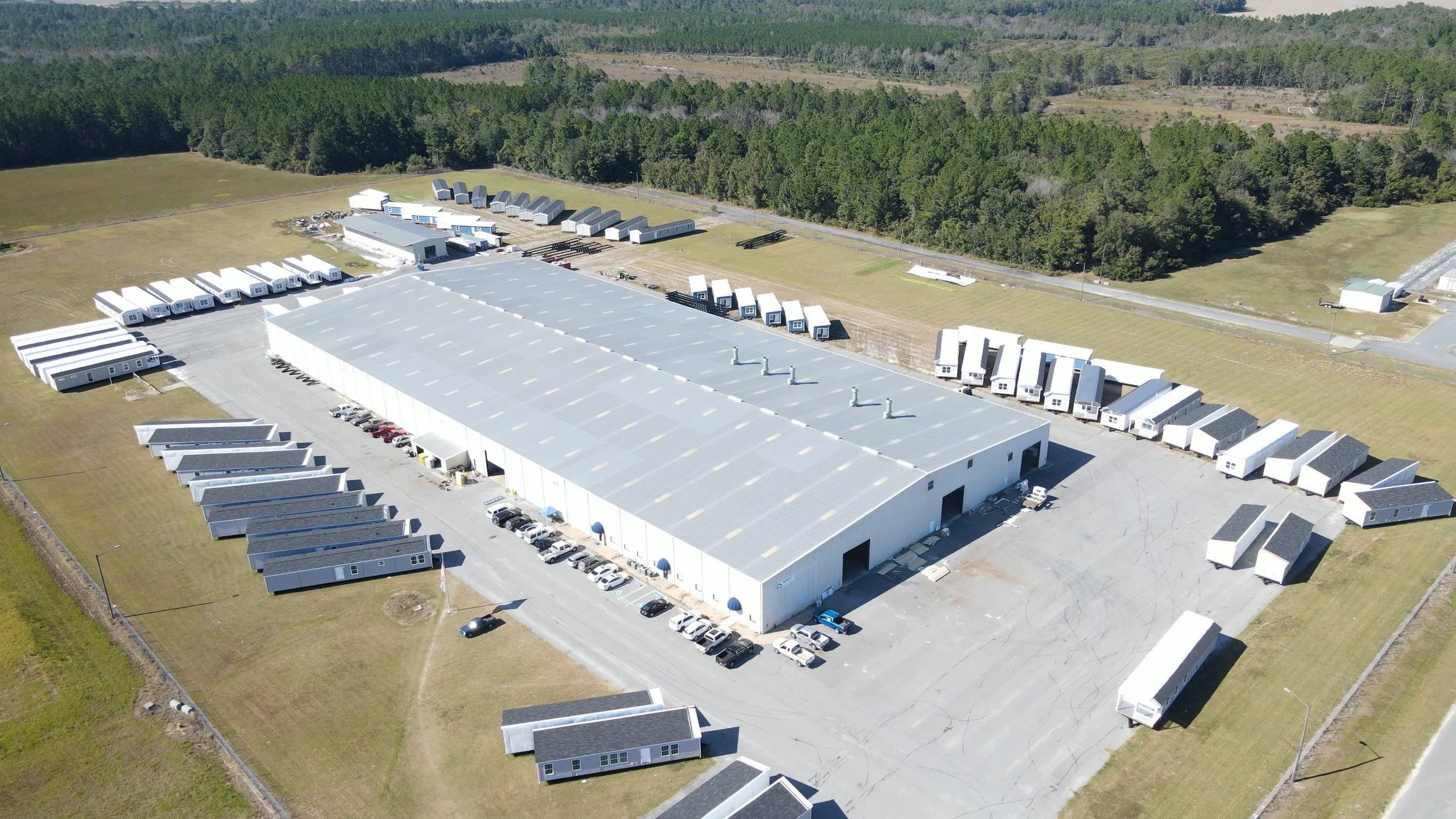
Through its impact reporting services, LifeCity has engaged with innovative projects that emphasize waste reduction in the construction process. In 2022, LifeCity visited Impact Housing, a manufacturer of modular homes located in Appling County, GA, to provide impact reporting services for AMCREF Community Capital’s New Markets Tax Credit (NMTC) investment into the company. The modular homes produced by Impact Housing are used in part for affordable housing units and have been leveraged as part of disaster recovery efforts in coastal communities.
Building Efficient, Affordable Housing
AMCREF’s investment enabled Impact Housing to equip, operate, and expand its production facility in Appling County. According to Co-Founder and Former COO of Impact Housing Matt Calamari, the company is a “manufacturer of modular housing built to the same international residential code that all stick building houses are built to.” The company was formed in 2020 to provide real world solutions to the current affordable housing problem in the United States. Impact Housing operates a state-of-the-art facility in which it produces durable, affordable, and energy efficient housing. Homes produced by Impact Housing are designed to provide affordable options for middle income earners, but they also have specific applications in lower income areas as well as for individuals and families displaced by disasters. The homes produced at the Appling County facility will generally be sold to affordable housing developers across the southern US. Crucially, the homes built at Impact Housing create significantly less waste and harmful emissions than traditionally constructed homes.
After initially leasing the facility from the Southeast Georgia Regional Development Authority, Impact Housing now owns its facility and plans to scale up operations. The NMTC investment allowed the company to produce around 300 homes per year early on, with plans to expand to 1,000 homes annually and beyond in future years.
Providing Quality Employment
As of LifeCity’s visit, Impact Housing had hired 125 full-time equivalent employees with plans to to grow to 140 by the end of that year. The project was ultimately projected to support 218 jobs – 140 newly created and 78 retained. According to Keri Orvin, City Manager for the City of Baxley, GA, these jobs are critical to stem the workforce talent loss that impacts so many rural communities as their high school graduates move to urban areas for better job opportunities. Said Orvin, “If we can keep them here and get them raising their families here, it just builds local opportunities, and that’s what we want to do.”
The jobs created at Impact Housing are quality jobs, paying a family sustaining wage 41% over the local living wage on average, along with training and benefits. Phyllis Carter, Human Resource Manager for Impact Housing, described the core values that drive the quality employment at the company: “People need to have benefits. They need to be able to provide for their families.”
Bolstering the Local Economy
Impact Housing’s project is well aligned with local and regional economic development goals. The Joint Comprehensive Plan for Appling County, City of Baxley, City of Graham, and City of Surrency, Georgia specifically identifies attracting new businesses and jobs, developing and improving local industrial development parks and sites, and enhancing intergovernmental cooperation as economic goals for the region. Impact Housing helps meet each of these goals. The project is located in Park West Industrial Park in Baxley. Impact Housing acquired the facility from the Southeast Georgia Regional Development Authority, and has been approached by local officials about the possibility of acquiring an additional adjacent facility at some point in the future.
Additionally, the jobs created at Impact Housing are the type of jobs that can uplift a community. All of the jobs created at Impact Housing are quality jobs, and 99% of these jobs are accessible to low-income persons, low-income community residents, and individuals with lower levels of education. Calamari views quality wages and accessibility as key issues for management, and the company also strives to make the work experience a positive one for employees. “On the culture initiative side, outside of pay, we really just focus on the family aspect of this,” he said. Miram De La Mora, Supervisor in the Floor Department, described the company’s approach to its employees: “They invest in us….I believe that’s what draws a lot of people to this company.”
The company also supports the local economy by engaging with local services, including a catering agreement with local Circle F Meats and a relationship with Waycross Winlectric Company for its utility needs. Orvin described the importance of having a company like Impact Housing in the local economy: “Having a facility like Impact Housing in our community gives people the option that want to come back, but didn’t find the economic prosperity here before. So that’s a major piece to that puzzle.”
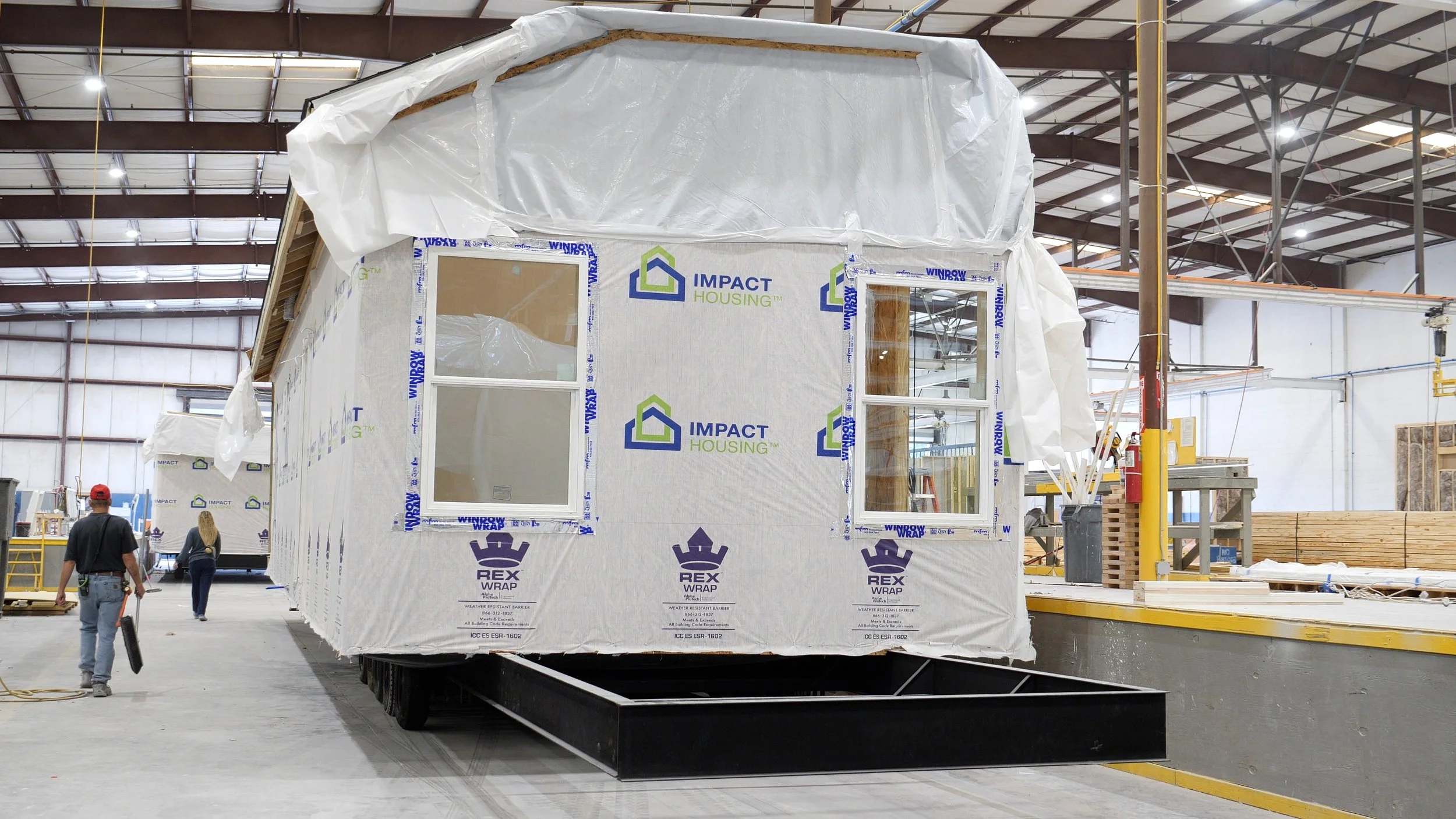
Impact Housing is an example of the NMTC program’s ability to generate projects that have multidimensional benefits. The company provides fast, efficient, and affordable housing options for low- and middle-income families, including many who are facing disaster recovery, all while bolstering the local economy through employment and community engagement. Projects like this showcase the possibilities of intentional community development.