
LifeCity Visits Wastewater Projects on Navajo Nation
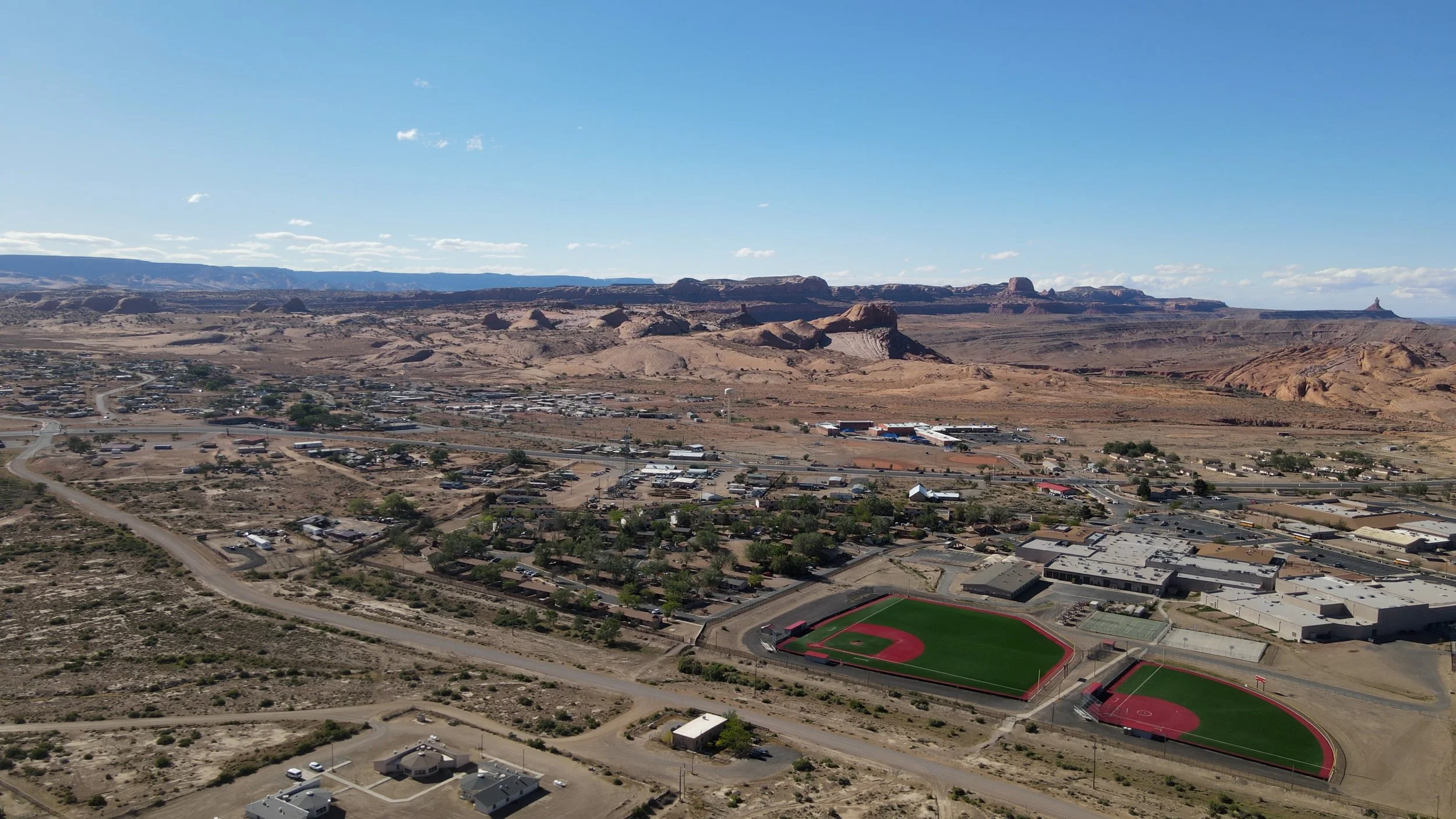
In May 2026, LifeCity visited the Navajo Nation to provide impact reporting services on two wastewater treatment projects – the Kayenta Wastewater Treatment Plant (WWTP) and the Chinle Wastewater Treatment Plant (WWTP). Each project is located within the Navajo Nation in the Kayenta and Chinle Chapters, respectively. The projects were each partially funded by National Impact Fund (NIF) via the federal New Markets Tax Credit (NMTC) program, and they both provide economic and public health benefits in severely distressed low-income communities. The projects are owned and operated by the Navajo Tribal Utility Authority (NTUA), a tribal nonprofit organization whose mission is to provide quality utility infrastructure across Navajo Nation.
Expanding Utility Access
The Kayenta and Chinle WWTPs will provide increased access to wastewater treatment across Navajo Nation, a region which currently has over 13,000 homes without access to basic utilities. Arlando Teller, Former Secretary for Tribal Affairs for the US Department of Transportation and former Chinle Chapter Manager, described the importance of clean water in the Chinle area: “We still have a ranching lifestyle. You see a lot of sheep, cattle, horses. The families that have those livestock take care of them before they take care of themselves. So clean water is important in all aspects, and it is part of our cultural heritage as well.”
The new facilities will replace outdated lagoon systems that were inefficient and unable to meet modern regulatory standards. According to Antony Davison, Waster and Wastewater Utility Manager for NTUA, the new WWTPs will process water in 24 hours, compared to 30 days for the previous systems.
Bolstering Public Health
A major impetus for building the Chinle and Kayenta WWTPs was to ensure that wastewater treatment in these communities is able to meet regulatory standards associated with the Clean Water Act. Jarvis Williams, Town Manager for Kayenta Township, described the impact: “The big win is the public health side of it, being able to take this product and turn it into something that feeds back into our ecosystem. I think it’s very valuable. It feeds into a lot of benefits that folks down river will be able to benefit from. Water is a valuable commodity here, and to have that ability to reclaim some of it for uses of the community is valuable.”
The project will have numerous environmental impacts that will benefit the community, including reductions in wastewater consumption and leakage, reduced air emissions, and reduced energy consumption as a result of the more efficient systems. According to NTUA Assistant Manager for Wastewater Compliance Programs Clint Ahasteen, “This facility, because of the screening and the biological process, is able to provide very efficient wastewater quality, so it doesn’t harm the environment.”
Supporting Economic Development
Shaandiin Parrish, Navajo Council Delegate for Kayenta, Dennehotso, and Chilchinbeto, said, “We’re planning to grow our economy and our jobs. We really thrive upon tourism, so that means we need wastewater [treatment].” Delegate Parrish continued: “We’re looking forward to the capacity that the [WWTP] can take on. That means our community can build more hotels and more commercial sites, so that our community can thrive.” Shawna Ann Claw, Navajo Council Delegate for Chinle, foresaw similar economic impacts of the Chinle WWTP: “What we’re looking at is creating that venue for businesses to come in and set up here, and also work with the local government, so they can create more opportunities for employment.”
Adding new jobs in the community will create an influx of population and demand for housing, and the new WWTPs will enable the communities to expand to meet that need. According to Davison, the Chinle WWTP will have the capacity to serve triple the size of the current Chinle community, and the Kayenta WWTP can serve double the size of the current Kayenta community.
Creating Local Jobs
Each of the WWTP projects will create quality jobs in severely distressed low-income communities. Importantly, the NTUA utilizes Navajo preference, meaning that local residents of Navajo Nation will have the opportunity to gain employment, workforce training, and ultimately a career pathway. Teller described the importance of this policy: “It allows NTUA to hire from home, and when you hire from home, there’s a lot of pride in the work that we do….That’s just strengthening our local economy here at home. We buy here, we sell here, we live here. So that does have a short term and sometimes a long term stimulus to the community.
Keeping job opportunities accessible to Navajo residents helps maintain community connections among people who would otherwise have to pursue employment far from home. Derrick Etsitty, a carpenter for Oscar Renda Contracting, described being able to work on the WWTP projects: “I never thought I would be working locally….It’s really nice because you get to go to family functions, you get to visit your family, you get to talk to your relatives….That’s what I really enjoy here, being able to enjoy local spaces with your family.”
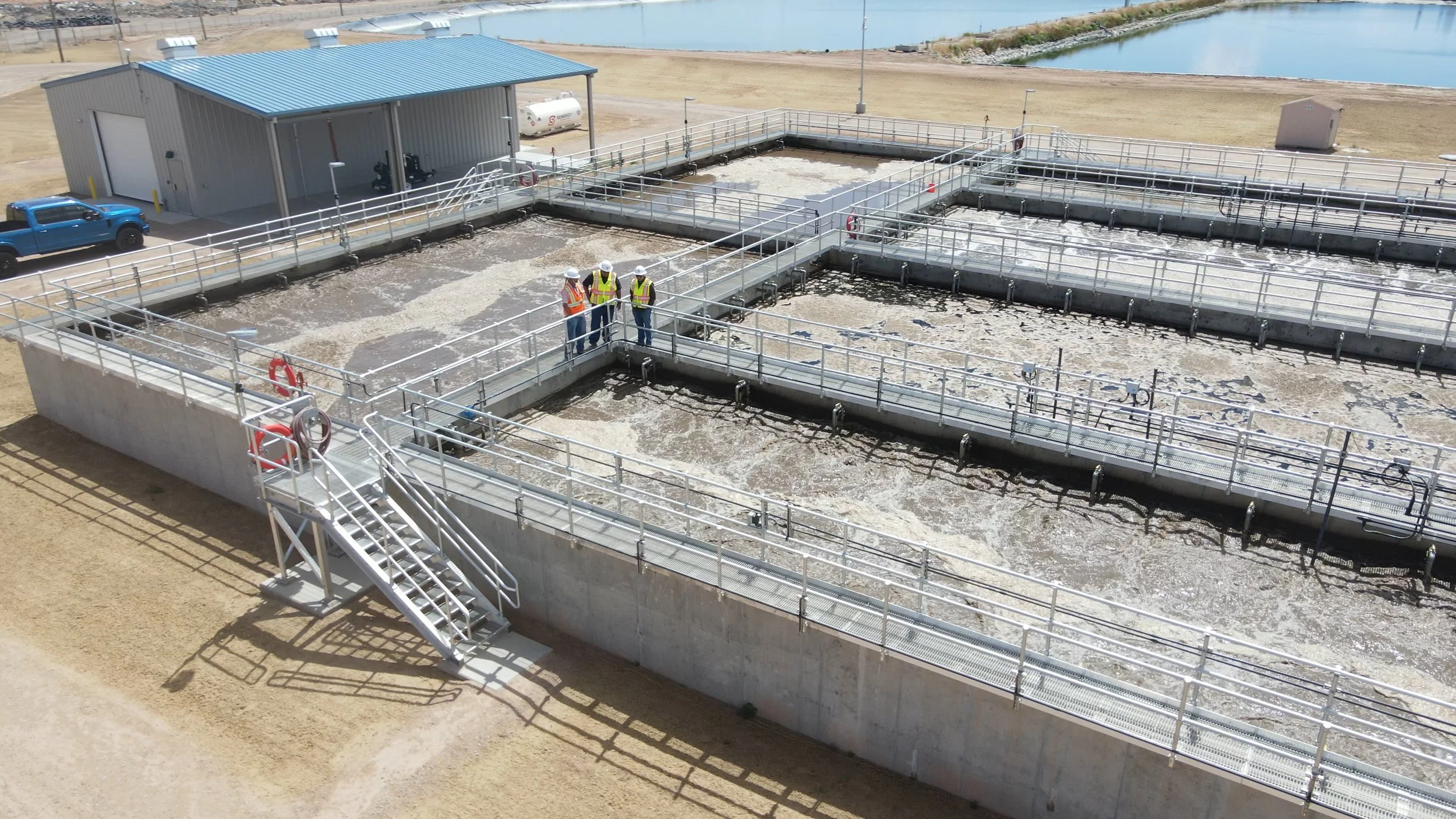
Projects like the Chinle and Kayenta WWTPs are examples of how CDEs can leverage the NMTC program for foundational projects that position distressed communities to pursue their economic development goals. These projects will provide Kayenta and Chinle with the physical capacity to expand in a way that is self-determined and beneficial for the local communities. Speaking about the Chinle WWTP, Delegate Claw said, “I think this project was very unique in the sense that there was no disturbance made with ill intent. It was very respectful, and that was one thing I appreciate because our Navajo people, we still continue to make offerings to the land, and water is life.”